
Design notebook
Bough, Oak and Perch: three shapes for OakLink
· Three Oak Woods
An alert button has to make sense in the place where someone actually lives. That is the starting point for our latest enclosure studies: one clear control, a familiar shape and a wearable that feels natural to keep nearby.
Update, October 14, 2026: The website now leads with the original bark-covered tree base and acorn button artwork. The Bough lead choice described below belongs to this September 28 entry; all three later enclosure studies remain exploratory, with no final enclosure selected.
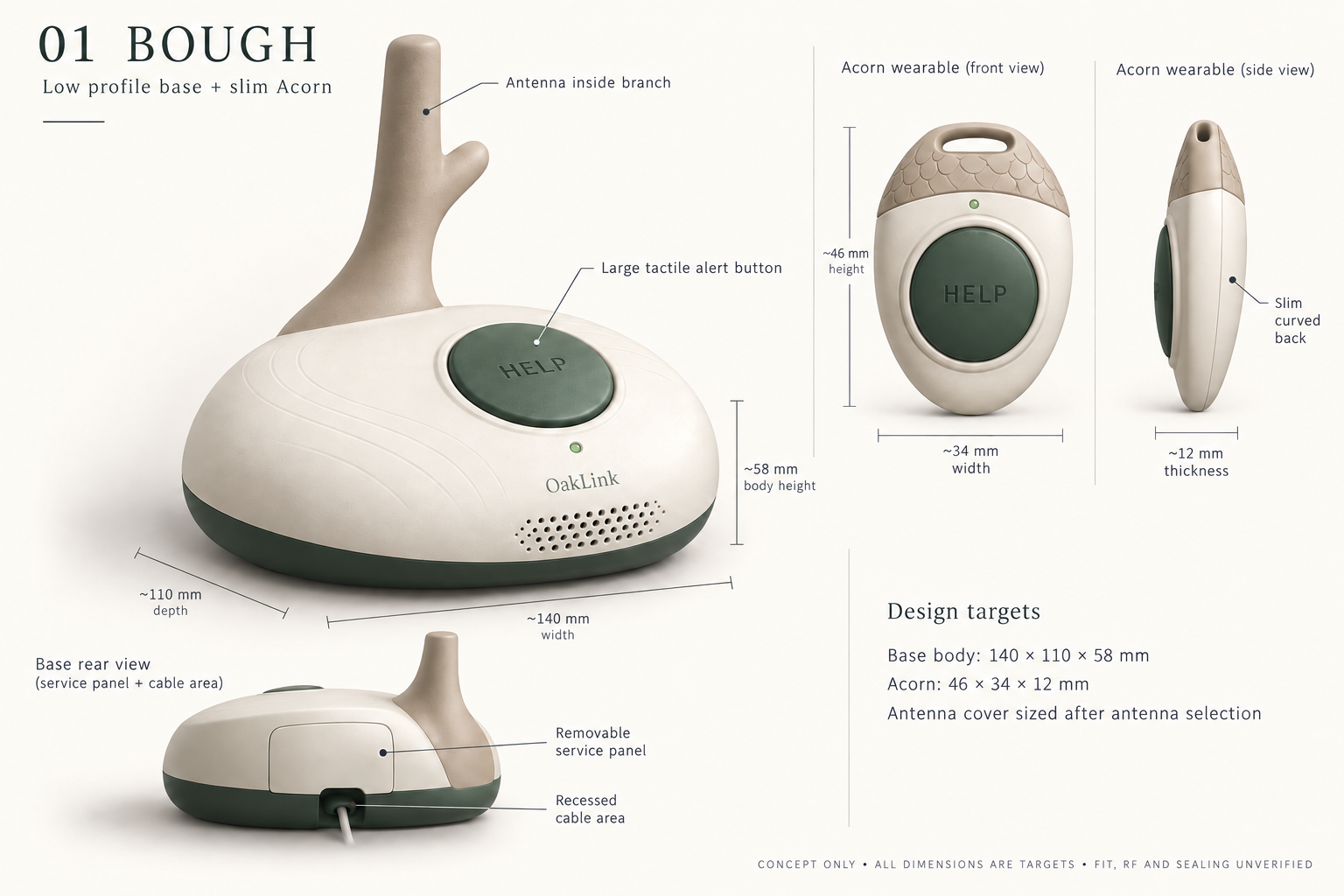
Bough: a quieter presence
Bough sits low and broad, with an ivory body, woodland-green details and a warm branch shape. The matching Acorn explores a flatter profile with a large button occupying most of its face. We are leading with Bough on the website while continuing to show all three alternatives; a final enclosure has not been selected.
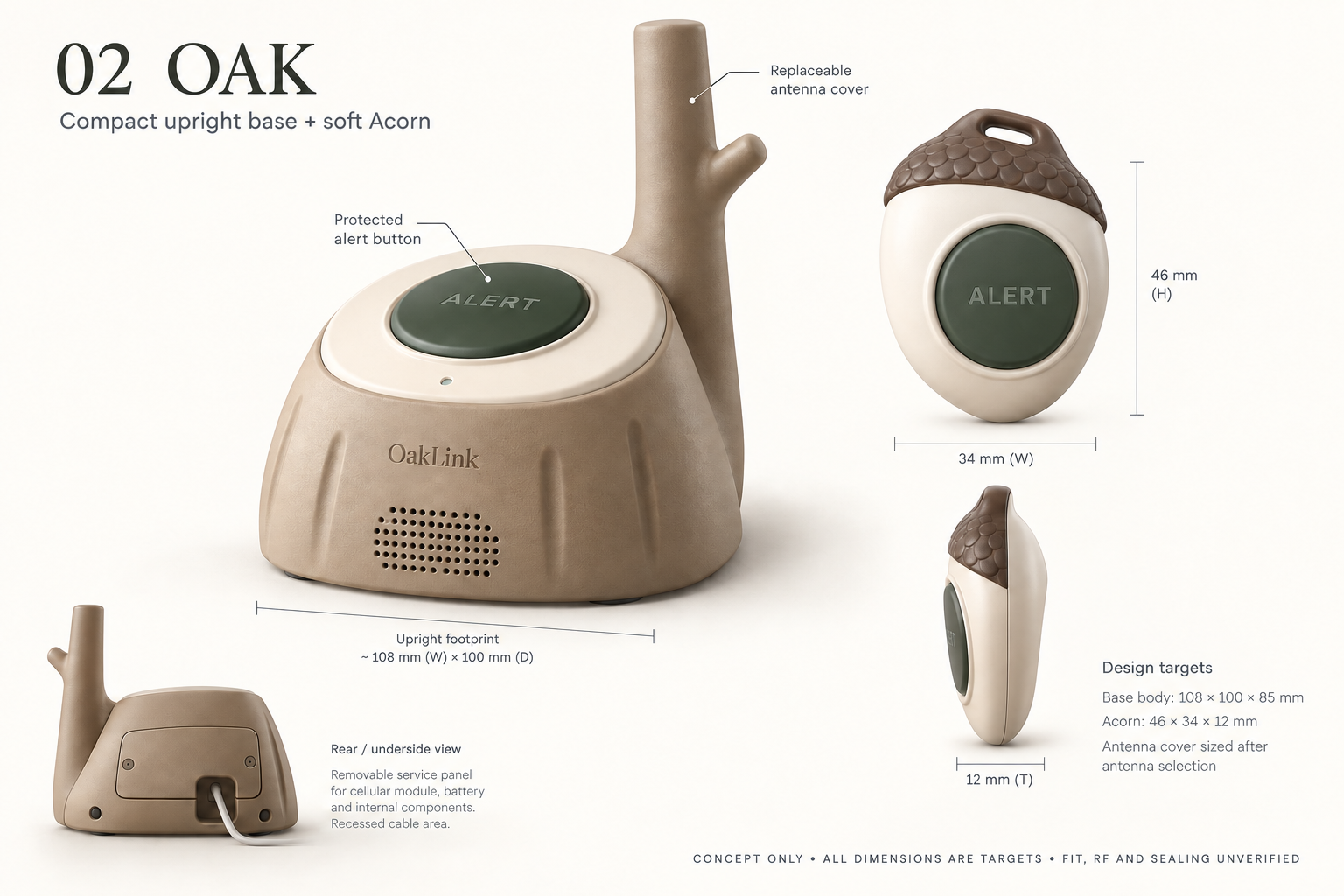
Oak: a smaller footprint, a taller shape
Oak keeps the tree-stump connection more literally, with a softly fluted upright body. Its smaller tabletop footprint trades against a taller internal arrangement. That is a packaging question we still need to resolve with measured components, rather than something the illustration can answer.
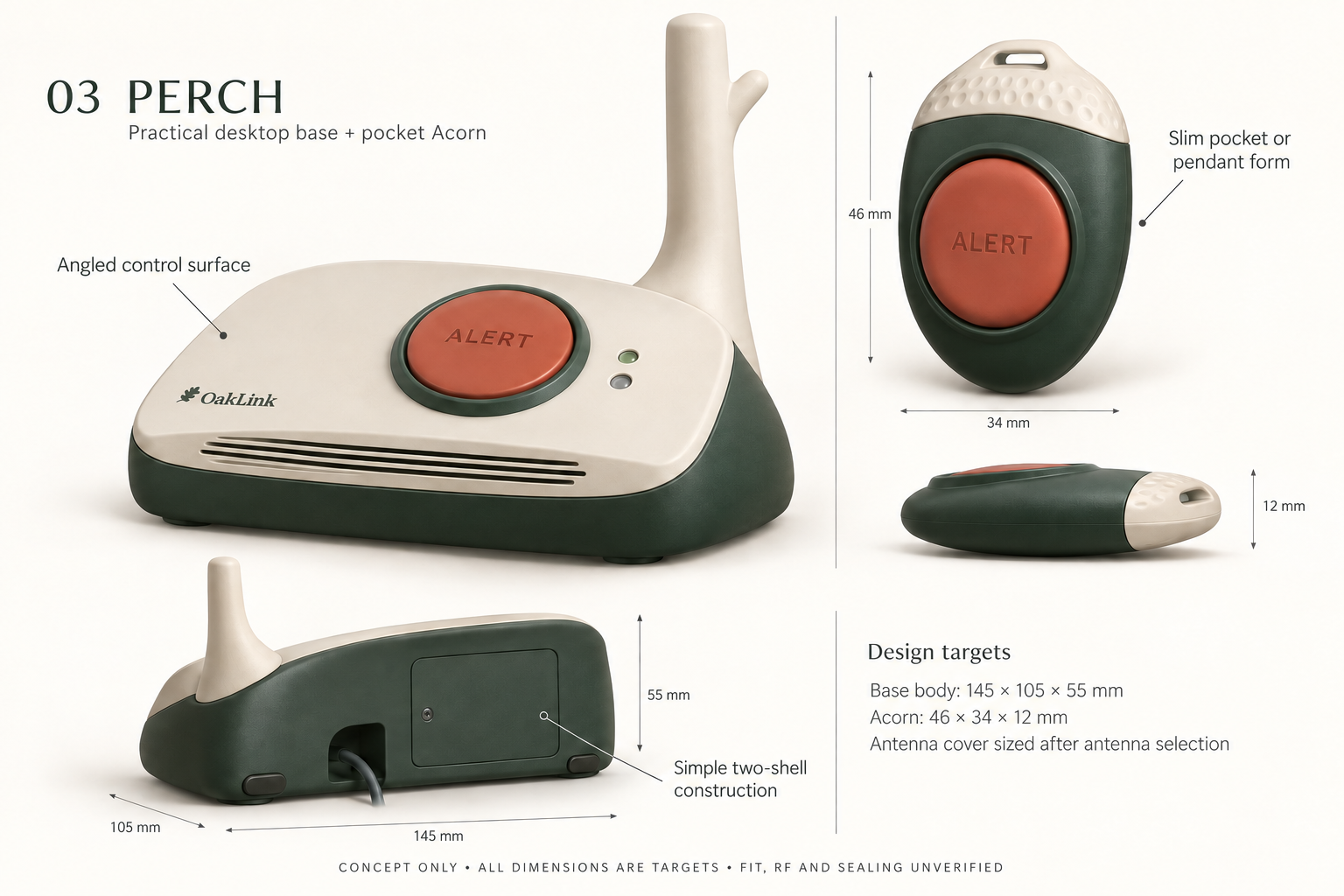
Perch: an angled face and a contrasting button
Perch explores a rounded wedge with a terracotta control. It feels closer to a familiar tabletop appliance, with an angled face and a matching pocket or pendant Acorn. Shape and color remain separate choices; there is room to learn from each direction.
What we have made so far
All three concepts now have editable models and printable files: 21 separate parts in total, covering a base and matching Acorn for each direction. The digital mesh and assembly checks passed. Physical printing and fit have not yet been verified.
The Acorn design target is 46 mm tall, 34 mm wide and 12 mm thick. That target is for future custom electronics, not a promise that our present boards and battery fit. The branch is a proposed antenna cover; its final shape has to follow the antenna requirements.
Next: hold it, assemble it, learn from it
Our next step is to print an unpowered Bough Acorn sample, then one base, and assess hand feel, assembly and proportions. The printed buttons are static mockups, not working alert controls. Electronics mounting and a real button mechanism come after those physical trials.
These illustrations are shape studies, not product photographs. Wireless performance, heat, sound, attachment strength and water resistance remain unverified. A pleasing shape is a beginning; it still has to become a practical enclosure.